Showing posts with label Human Rights. Show all posts

Tuesday, August 20, 2013

Policy Matters: Fragmentation, censorship and political surveillance of Internet among risks in global debate on governance


Governance issues over the evolution of Internet technology, resources, protocols and standards will play an increasingly important role in global debates
WATERLOO, CANADA: Governance issues over the evolution of Internet technology, resources, protocols and standards will play an increasingly important role in global debates, according to a new report issued by The Centre for International Governance Innovation (CIGI).
In Internet Points of Control as Global Governance, CIGI senior fellow, Laura DeNardis explores key Internet governance issues that will have profound impact on global public policy discussions in coming years. She says that government involvement in regulating or facilitating Internet interconnection through a payment model, for example, would be a departure from the current governance approach and could "fragment the Internet based on political manipulation."
DeNardis says this change "Could present a range of unintended or intended consequences - such as creating new concentrated points for government censorship, surveillance and politically motivated interconnection blockages, or creating economic disincentives for major content companies."
DeNardis also points out the consequences that could come from having the Domain Name System (DNS) play a larger role in content control. Noting that this approach is already used for censorship in repressive contexts and in the United States for intellectual property rights enforcement, DeNardis says, "This practice would be controversial because it would fragment the Internet's universality depending on country and possibly create security and stability challenges to the DNS."
The report, which outlines the critical Internet resources at play within the larger architecture ensuring a universal system, stresses that the technical standards, as esoteric as they are, can have a real economic and political impact, and "to a certain extent, enact public policy in areas that are traditionally carried out by governments."
DeNardis says: "They are the infrastructural foundations for global trade and the digital public sphere, but their design and constitution create public policy in areas as politically charged as privacy, accessibility and other individual civil liberties. The policy implications of Internet standards raise the obvious governance question of how these standards are procedurally established and by whom."
Source: http://www.ciol.com/ciol/news/193617/fragmentation-censorship-political-surveillance-internet-risks-global-debate-governance

Monday, August 19, 2013

South Africa: Confronting choices about free expression

As the G20 nations prepare to meet in St Petersburg, Russia in early September, Index on Censorship is exploring the nations’ records free expression
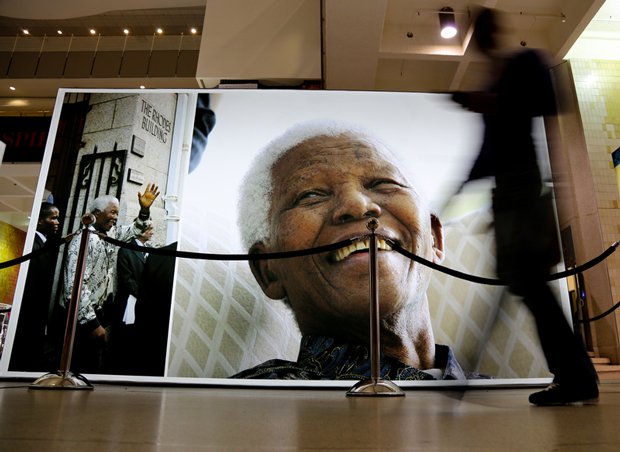
By Christi van der WesthuizenThe City of Cape Town launched the Nelson Mandela Legacy Exhibition to honour his contribution to South Africa's democracy. The exhibiton is a collection of historic photographs and visuals capturing significant moments in Mandela's life. (Photo: Sumaya Hisham / Demotix)
The City of Cape Town launched the Nelson Mandela Legacy Exhibition to honour his contribution to South Africa’s democracy. The exhibiton is a collection of historic photographs and visuals capturing significant moments in Mandela’s life. (Photo: Sumaya Hisham / Demotix)
Though the shackles of apartheid and the public role of Nelson Mandela have faded, South Africa is confronting questions about government surveillance in the digital era, media regulation and artistic censorship.
Apartheid in South Africa (1948-1994) was partially kept in place with restrictions on the flow of information. The state attempted to draw a veil of secrecy over the intensification of repression through detention without trial, house arrests and the torture and killing of opponents from the 1960s onwards. Music and literature were among the modes of anti-apartheid resistance from the 1960s onwards. Literature and music supportive of political opposition or that was deemed sexually permissive was banned. Some journalists, authors and musicians left the country to escape prosecution while many who stayed were persecuted. Television was only allowed in the country in the mid-1970s and only when the then ruling National Party was convinced it could control the medium.
The transition to democracy in the 1990s under Mandela marked a radical departure, with openness and transparency declared primary aims. Clause 16 of the Bill of Rights in the South African Constitution of 1996 guarantees that “everyone has the right to freedom of expression, which includes freedom of the press and other media; freedom to receive or impart information or ideas; freedom of artistic creativity; and academic freedom and freedom of scientific research.” However, this right is not absolute. The same clause warns that it “does not extend to propaganda for war, incitement of imminent violence; or advocacy of hatred that is based on race, ethnicity, gender or religion, and that constitutes incitement to cause harm.” Clause 14 (d) of the Bill of Rights safeguards the right to privacy, including the right not to have the privacy of communications infringed.
South Africa’s adoption of the right to freedom of expression in its Constitution is reflected in a lively national debate as democracy takes root. However, as pundits claim the space to hold to account the government and, less frequently, business, the past five years have seen worrying moves against free expression. These range from verbal threats to legislative measures to the irregular arrest of a journalist. Protesters have also targeted journalists at community-level demonstrations about socio-economic rights.
Media Freedom
Four large corporations dominate South Africa’s print media sector, which limits diversity in opinion. While the sector has been battling plunging circulation figures, as elsewhere in the world, it has still managed to invest in investigative journalism, which remains vibrant. Art and related types of journalism have however suffered from a lack of resources. The media stand at the centre of vehement political debates in the country, with newspaper leaks common in the infighting between factions of the ruling African National Congress (ANC). The combination of political and investigative exposures has led to ANC threats of appointing a “media tribunal” to replace the system of self-regulation. In response, the media funded a public consultation process, and a new system has been instituted which remains self-regulatory but includes more mechanisms to allow greater accountability of the press to the public. However, the ANC has decided that the country’s parliament should still investigate the creation of a media tribunal “that is empowered to impose sanctions without the loss of any constitutional rights”.
The Protection of State Information Bill was adopted by parliament this year, despite concerted resistance from a wide range of organisations and individuals. The bill, driven by state security agencies, is expected to undermine access to state information and inhibit investigative journalism. Revisions did not address its draconian penalties of up to 25 years or the overly narrow scope of its belatedly included public interest clause. In a significant improvement, however, the bill no longer overrides the Protection of Access to Information Act or the Protected Disclosures Act, both passed in 2000.
Recent changes in print media ownership have seen the Independent Newspapers (former Argus) group returned by the Irish company Independent News and Media (INM) to South African control. While INM is generally regarded as having “harvested” the Independent Newspapers and thereby stunting its growth in South Africa, the acquisition by Sekunjalo has raised concerns about political control as business allies of the ruling party are involved in the deal.
Most South Africans remain dependent on television and especially radio for information. The state-owned South African Broadcasting Corporation (SABC) remains the dominant TV and radio outlet with its programming in all 11 languages. However, the SABC has been riddled with management battles and repeated allegations of political interference, which included the blacklisting of commentators critical of the government.
Digital Freedom
After a good start in the 1990s when Internet use was commercialised in South Africa, tardy and expensive broadband has slowed connectivity. Recent research suggests that 39 percent of adults, or 14 million people, access the Internet at least once a week. Another study found that a relatively high percentage of South Africans use mobile phone services (66 percent). According to the 2011 government census, half of those who use the Internet use their mobiles to do so, as only about 23 percent of households have a computer at home. Internet service providers believe this number would be higher if mobile broadband prices were more competitive. While mobile broadband is more affordable and faster than fixed-line services, prepaid mobile customers pay more than contract customers, which means poorer people have less access.
Regarding government measures, the Regulation of Interception of Communications and Provision of Communication-Related Information Act of 2002 (RICA) requires service providers to record and keep customer information, which can be requested by government agencies. The act disallows interception of communication, subject to judicial approval. Similarly, a judge has to grant permission before government agencies can access mobile phone records.
The Right2Know (R2K) civil society campaign in 2012 mobilised against the General Intelligence Laws Amendment Bill, which would have empowered state-security operatives to monitor e-mails and social media communication without permission from a judge. While this expansion of powers was avoided, R2K pointed out that the final version of the bill still did not provide clarity regarding the monitoring of electronic communication passing through a foreign server. The Mail and Guardian newspaper hasreported on the illegal bugging of private citizens’ communication. Security agencies’ illegal monitoring of communications has become a weapon between factions in the ruling party. In the most notorious case, the ascendancy of the current president, Jacob Zuma, to the highest office was clinched with the withdrawal of corruption charges against him on the basis of “spy tapes”. These recordings, seemingly illegally made, allegedly showed a political plot against Zuma that involved the National Prosecuting Authority. Interceptions by the police’s crime intelligence divisions rose sharply between 2009 and 2010, including illegal bugging that led to the recent resignation of the head of the South African Revenue Services for attempting to recruit someone in return for sexual favours. Meanwhile, the implications are unclear of the National Cyber Security Policy that the ANC wants the government to adopt by 2014 to prevent the distribution of “harmful and anti-social” content.
Artistic Freedom
Artists have enjoyed unprecedented freedom to be creative in South Africa since the transition to democracy. However, political tensions have risen about art seen as ridiculing Zuma. In 2012, Brett Murray’s painting called “The Spear” was exhibited at a Johannesburg art gallery, depicting Zuma in a well-known pose of Communist leader Vladimir Lenin but with his genitals exposed. ANC leaders pressurised the gallery by leading a march of ANC supporters to its doors. Two men defaced the painting while on display.
An amendment in 2009 to the Film and Publications Act of 1996 that every unregistered print and online publication that contains sexual content be submitted for classification by the Film and Publications Board has since been declared unconstitutional by the High Court. The Constitutional Court still has to confirm the High Court’s decision. The board has been skittish about films depicting teenagers in sexual situations, whether consensual or forced. In 2008 it banned the Argentinian film “XXY” and this year it banned the South African film “Of Good Report” on the basis of being “child pornography”. Both bans have since been overturned.
Source: http://www.indexoncensorship.org/2013/08/south-africa-a-bric-confronting-choices-about-free-expression/

Tuesday, August 13, 2013

Policy Matters: Bringing global human rights into the surveillance debate - Surveillance is no longer the Cold War mentality of "us" and "them"


By Leslie Harris(Photo illustration: Shutterstock)

(Photo illustration: Shutterstock)
Around the world, there is confusion and alarm over the impact of the U.S. National Security Agency’s (NSA) surveillance program on human rights. In the U.S., the debate is focusing on the gross violations of privacy rights of Americans. Barely a word is being spoken about the human rights of people outside the country whose personal communications are being targeted, and whose communications content is collected, stored, analyzed and used with little legal protection.
A growing group of international civil society groups and individuals wants that to change and is coming together to present the newly empowered U.S. Privacy and Civil Liberties Board (PCLOB) with a joint letter, asking the Board to make “recommendations and findings designed to protect the human rights not only of U.S. persons, but also of non-U.S. persons.” Before PCLOB’s mid-September deadline for public comments, I encourage global civil society to add their name to this powerful statement.
As the letter makes clear, there is great concern from the global community that the recently revealed surveillance program conducted under Section 702 of the Foreign Intelligence Surveillance Act (FISA) poses a severe threat to human rights. It rightly notes that the surveillance “ strikes at the heart of global digital communications and severely threatens human rights in the digital age.” “The use of unnecessary, disproportionate, and unaccountable extra-territorial surveillance not only violates rights to privacy and human dignity, but also threatens the fundamental rights to freedom of thought, opinion and expression, and association that are at the center of any democratic practice. Such surveillance must be scrutinized through ample, deep, and transparent debate. Interference with the human rights of citizens by any government, their own or foreign, is unacceptable.”
Why then is all the attention in the U.S. focused on just the rights of Americans? The U.S. draws its obligations to protect rights in conducting surveillance from the U.S. Constitution, specifically the Fourth Amendment, which protects “The right of the people to be secure in their persons, houses, papers, and effects, against unreasonable searches and seizures.” The “people” generally means all people located within the United States regardless of citizenship, and then only when they have a “ reasonable expectation of privacy.”
Except in the most extraordinary circumstances, and for U.S. citizens and lawful residents when they are travelling abroad, people outside the U.S. have no privacy protections under the Fourth Amendment. This is a feature in the U.S. Constitution and it animates every part of U.S. surveillance law and practice. That is why Section 702 of FISA requires targeting and minimization guidelines that are aimed (albeit inadequately) at ensuring that the communications being targeted are those of people reasonably believed to be outside the U.S. It’s also why they provide some level of protection for ordinary Americans whose communications are ensnared in foreign intelligence activities and take no notice of the rights of ordinary people all over the world whose personal communications now reside in NSA databases.
It may be hard to fathom now, but Congress created the FISA Court to rein in surveillance after revelations about illegal political spying on Americans surfaced in the 1970’s. The Court had a narrow charge:  to ensure that electronic surveillance conducted in the United States for intelligence purposes is conducted pursuant to a warrant. The warrant protection did not apply to surveillance conducted outside the U.S., so it did not protect the rights of foreigners outside the U.S.  However, in those days, communications surveillance within the U.S. was a limited and highly targeted activity aimed at hostile foreign powers and their agents. The phone conversations of ordinary people were of no interest. International phone calls between a person in the U.S. and person abroad were quite expensive and relatively rare.
Today, the assumptions that informed the enactment of FISA have been worn thin by a radical shift in threats – from states to diffuse non-state actors – and an even more radical shift in technology. The advent of the internet, the data storage revolution and big data analytics, fueled by fears about terrorism, have, in the post-PATRIOT Act world, fueled a growing government appetite for data. Today, the NSA isn’t just trying to listen in on the embassy abroad of a Cold War rival; instead, it doesn’t know whom to listen in on because it does not know who might pose a threat.  In the process, individualized targeting based on specific indicia of threat has given way to bulk programmatic targeting of foreign communications without any consideration of human rights of people beyond our borders.
This position is simply untenable in today’s much smaller world, where the Cold War line between “us” and “them” has blurred.
When FISA was enacted, there was no global internet and the cost of international calls was prohibitive. Large parts of the world were unreachable for political or technical reasons. Now, we are a nation of more immigrants, global businesses and frequent travelers. We live online and carry our cell phones everywhere. The cost of an international call has plummeted by more than 90% and the number of U.S. billed international calls and the use of VOIP has skyrocketed.  Skype calls worldwide alone grew 44% to167 billion minutes in 2012.
Everyday, Americans are calling, emailing, texting and “friending” family, friends, colleagues and customers around the world, engaging in so-called “foreign communications.” For those on the other side of our emails and calls, there is no protection for free expression or privacy rights. In fact, their communications may be collected, examined and used by the government for any legal purpose.
The U.S. is certainly not alone in the breadth of its surveillance activities. Britain’s spy agency monitors the cables that carry the world’s phone calls and internet traffic in close cooperation with the NSA. Indeed, according to leaked documents, Britain’s GCHQ collects more metadata than the NSA with fewer limitations. Germany’s foreign intelligence agency, the BND, is monitoring communications at a Frankfurt communications hub that handles international traffic to, from and through Germany, and the BND is seeking to significantly extend its capabilities. Le Monde reports that France runs a vast electronic spying operation using NSA-style methods, but with even fewer legal controls. And Russia’s notorious SORM system is reportedly even more advanced than the American system.
The U.S. is also not alone in focusing most of the protections of its surveillance laws internally.  Such focus is also a feature of the surveillance laws and practices in democratic countries around the world, most of which take a highly territorial view of their human rights obligations and are unlikely to willingly give them extraterritorial application.
There is an urgent conversation to be had in the U.S and beyond about the implications of cross-border surveillance. Given the globalization of information society services, we now must assume that the data pertaining to the citizens of one country will flow through the infrastructure of another and be subject to collection and use for national security purposes. Surveillance standards must be strengthened everywhere to ensure that robust judicial oversight and that principles of specificity, necessity, proportionality, data minimization, use limitation and redress for misuse are the norm. In a globally networked world, legal standards must also recognize the human rights implications of cross-border surveillance and set out a way forward to protect the rights of people beyond state borders. There is ambiguity about whether our largely territorial human rights paradigm is adequate to meet the challenge.
That is why the call to PCLOB to speak to the rights of non-Americans is so important. PCLOB has a simple mission: to make sure privacy and civil liberties are at the table as new security measures to protect the nation are considered. It has boldly taken on the NSA surveillance program as its first task, but it is too soon to know whether it has the muscle or the will power to push meaningful reforms.  It has an opportunity to show global leadership by heeding the call to make concrete recommendations about the rights of non-U.S. persons that can frame the global discussion about surveillance and human rights going forward. Add your name to the letter and tell PCLOB to seize the opportunity.
Source: http://www.indexoncensorship.org/2013/08/bringing-global-human-rights-into-the-surveillance-debate/

Policy Matters: Internet freedom depends on where you live


A Vietnamese woman sells coconuts and waits for business outside a local internet cafe in Ho Chi Minh City. Vietnam has just passed a new law aimed at internet censorship.
We think of the internet as an endless expanse of data and interaction with big, bright points of focus, and a million dark corners. But more and more, your view of the web's vast spectrum depends a lot on where you live. In Vietnam, there's an extreme example of censorship. A new law there will make it illegal to post news or quote "general information" on the internet. What the heck does that mean? Hard to know, and that's on purpose, says Madeline Earp, of the advocacy group Freedom House. Earp has been working on a big report out next month called Freedom of the Net. She says Vietnam is a country that is going the China route in internet policy.

Monday, August 5, 2013

NEWS: Global Coalition States Principles to Protect Human Rights from Surveillance


AUGUST 1, 2013 | BY KATITZA RODRIGUEZ
For some time now there has been a need to update understandings of existing human rights law to reflect modern surveillance technologies and techniques. Nothing could demonstrate the urgency of this situation more than the recent revelationsconfirming the mass surveillance of innocent individuals around the world. 
To move toward that goal, today we’re pleased to announce the launch of the International Principles on the Application of Human Rights to Communications Surveillance. The thirteen principles articulate what international human rights law – which binds every country across the globe – require of governments conducting surveillance in the digital age. They speak to a growing global consensus that modern surveillance has gone too far and needs to be restrained. They also give benchmarks that people around the world can use to evaluate and push for changes in their own legal systems.
The product of over a year of consultation among civil society, privacy and technology experts(read hereherehere and here), the principles have already been co-signed by over hundred organisations from around the world. The process was led by Privacy InternationalAccess, and the Electronic Frontier Foundation.
The principles can be found in full at necessaryandproportionate.org. They include requirements that surveillance law ensure all interceptions  be  legal, and for a legitimate purpose; necessary,  proportionate and adequate; be overseen by a competent judicial authority; include transparency, user notifications, public oversight and due process, protect the integrity of communication systems, and include human rights safeguards against illegitimate access and the misuse of co-operation procedures between States.
The release of the principles comes on the heels of a landmark report from the United Nations Special Rapporteur on the right to Freedom of Opinion and Expression, which details the widespread use of state surveillance of communications, stating that such surveillance severely undermines citizens’ ability to enjoy a private life, freely express themselves and enjoy their other fundamental human rights. And recently, the UN High Commissioner for Human Rights, Nivay Pillay, emphasised the importance of applying human right standards and democratic safeguards to surveillance and law enforcement activities.
“While concerns about national security and criminal activity may justify the exceptional and narrowly-tailored use of surveillance programmes, surveillance without adequate safeguards to protect the right to privacy actually risk impacting negatively on the enjoyment of human rights and fundamental freedoms”. 
Over the next year and beyond, groups around the world will be using them to advocate for changes in how present laws are interpreted and how new laws are crafted.
We encourage privacy advocates, rights organisations, scholars from legal and academic communities, and other members of civil society to support the principles by adding their signature. To sign, please send an email to rights AT eff.org, or visithttps://www.necessaryandproportionate.org/about

Files


Source: https://www.eff.org/deeplinks/2013/07/thirteen-principles-for-human-rights